

If an upstairs shower weakens when another tap opens, you may have enough water at the source but not enough usable pressure at the fixture. A water pressure booster pump adds energy to that incoming water so it can overcome elevation, pipe friction, and simultaneous demand.
It is not a cure for every weak-flow problem. A booster pump cannot create water that the source cannot supply, and it will not repair a blocked pipe, clogged strainer, hidden leak, or incorrectly set pressure-reducing valve. We recommend measuring the system first, then selecting a pump at a defined flow and head.
What Is a Water Pressure Booster Pump?
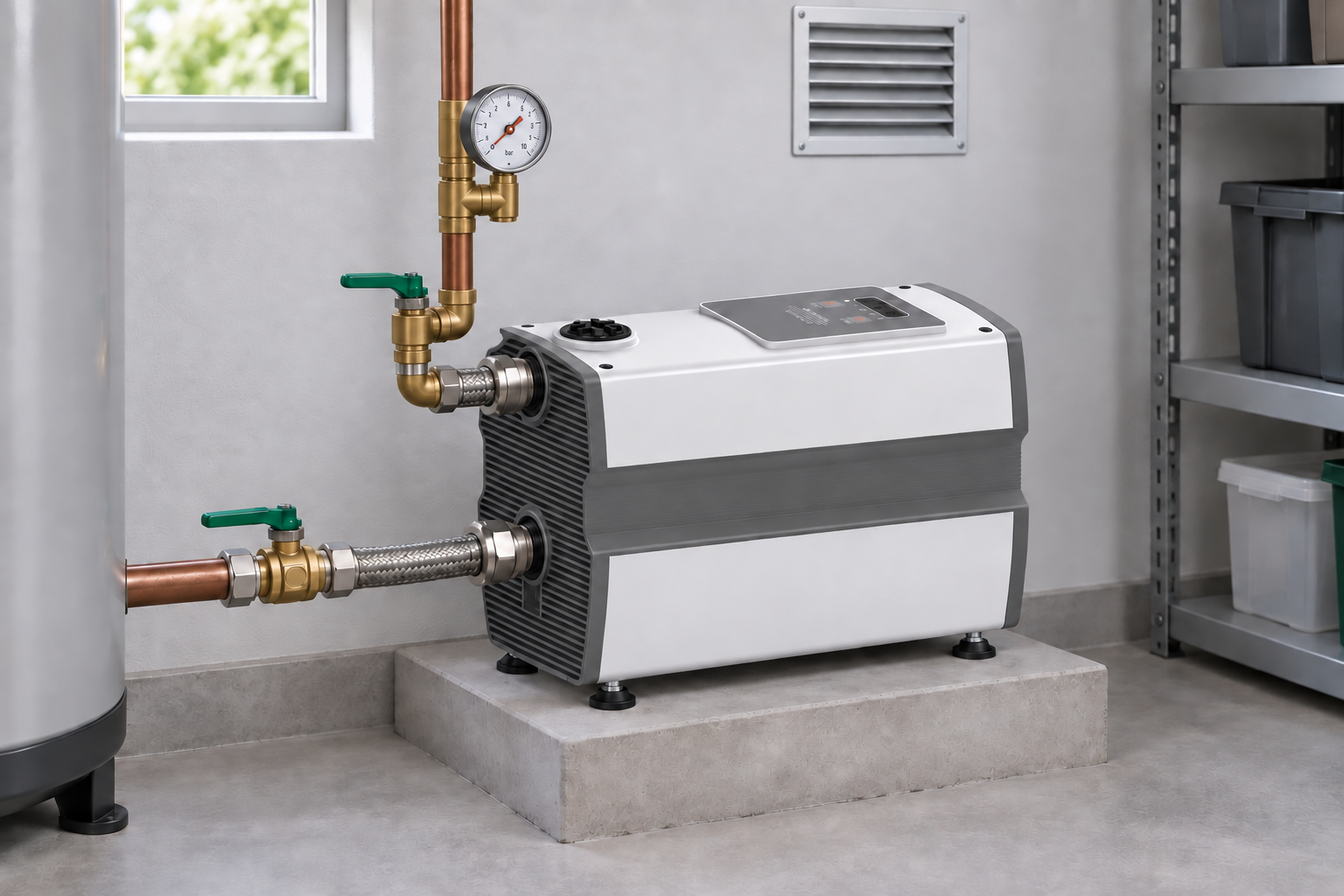
A water pressure booster pump is a pump installed in a water line or after a storage tank to raise the pressure available downstream. Most clean-water models use a motor-driven centrifugal impeller. Water enters the suction port, the impeller adds velocity, and the casing converts part of that velocity into pressure.
That pressure increase helps water reach a higher floor, a distant outlet, several fixtures operating together, or equipment with a minimum inlet-pressure requirement. A complete booster system may also include a pressure sensor, controller, check valve, pressure tank, isolation valves, and dry-run protection.
Pressure and flow are related, but they are not interchangeable. Pressure is the force available to move water; flow is the volume delivered over time. Your pump must supply the required flow at the required head on its performance curve.
How a Water Pressure Booster Pump Works
When you open a tap, pressure falls or flow begins. A pressure switch, flow switch, or electronic sensor detects that demand and starts the motor. The rotating impeller adds head to the water. In a multistage pump, water passes through several impellers, with each stage adding more head before the water reaches the discharge line.
A fixed-speed pump switches on and off at set thresholds. A variable-speed pump changes motor speed to hold a pressure setpoint as demand rises or falls. A pressure tank, when used, stores a small volume of pressurized water and can reduce repeated starts during minor draws; it does not replace the pump’s job of adding head.
For selection, start with the pressure required at the most difficult outlet. Add elevation and pipe, valve, filter, and backflow-device losses, then account for the usable inlet pressure at design flow.
Water Pressure Booster Pump Features to Compare
| Feature | Benefits | Key Checks |
|---|---|---|
| Pump stages | More stages can produce higher head in a compact footprint. | Duty-point flow and head, not separate catalog maxima. |
| Speed control | Fixed speed is simple; variable speed can keep pressure steadier as demand changes. | Setpoint range, sensor type, minimum speed, and control response. |
| Automatic protection | Dry-run, overload, overtemperature, and anti-cycling functions can protect the pump. | Which protections are built in and how faults reset. |
| Wetted materials | Water chemistry and temperature affect casing, impeller, shaft, and seal selection. | Fluid, temperature, solids, corrosion risk, and potable-water requirements. |
| Installation design | Port size, priming method, noise, cooling, and service access affect the finished system. | Inlet conditions, orientation, ventilation, bypass, valves, and available space. |
Variable speed is useful where demand changes through the day, but it is not automatically the best choice for every duty. The U.S. Department of Energy pump-system sourcebook recommends matching pump arrangements and controls to the system’s operating range. A correctly sized fixed-speed pump can be the practical choice for a stable, narrow duty.
Main Water Pressure Booster Pump Types
These labels overlap. For example, one pump can be both multistage and variable-speed, while another can be self-priming and automatically controlled.
Single-Stage Fixed-Speed Booster Pumps
A single impeller and on/off control make this type compact and straightforward. It suits modest pressure increases and predictable demand.
Multistage Water Pressure Booster Pumps
Several impellers add head in sequence. This type is useful when you need more pressure for upper floors, longer pipe runs, irrigation, washdown, or equipment feed. Horizontal multistage designs such as the Draconis MHI combine stainless-steel wetted parts with published ranges for home boosting, HVAC, irrigation, and industrial circulation. Always confirm the selected model on its curve.
Variable-Speed Smart Booster Pumps
A pressure sensor and variable-frequency control adjust speed as outlets open and close. This can reduce noticeable pressure swings and unnecessary full-speed operation. For compact residential duty, World Tree Mini has a published 0.09–0.18 kW range and maximum flow of 2–3 m³/h. For greater household demand, ECO Smart is listed up to 5.5 m³/h and 45 m maximum head. Those maxima do not replace duty-point selection.
You can compare more integrated models in the Draconis smart pump range. For project-level control choices, see our variable-frequency constant-pressure system guide.
Self-Priming Booster Pumps
A self-priming design can evacuate air from the suction line after correct initial priming. It is useful when water comes from a tank below the pump or when suction conditions are not continuously flooded. Check lift, suction-pipe sealing, available NPSH, and dry-run protection rather than assuming “self-priming” means the pump can operate without water.
Common Water Pressure Booster Pump Applications
Homes and Residential Buildings
Typical uses include weak municipal supply, rooftop or break-tank delivery, upper-floor bathrooms, water-heater inlet support, garden watering, and several fixtures running at once. A compact automatic unit may serve one branch, while a larger constant-pressure pump can cover a whole home. The Draconis PB household booster pump is designed for clean-water tap, shower, and rooftop-transfer duties. Browse the wider Draconis booster pump range by application, then verify flow and head.
Commercial and High-Rise Water Supply
Hotels, apartments, schools, offices, and mixed-use buildings need pressure at the highest and most remote outlets while demand changes throughout the day. These systems may use multistage pumps, multiple pumps in parallel, VFD controls, and a standby pump. Zoning can also prevent excessive pressure on lower floors. Our high-rise constant-pressure pump guide covers that narrower design task.
Irrigation, Washdown, and Light Process Duties
A booster pump can support sprinkler zones, greenhouse watering, filtration, cleaning, cooling loops, and equipment that needs a minimum inlet pressure. Confirm fluid cleanliness, temperature, corrosion risk, duty cycle, and whether demand is continuous or intermittent. A residential clean-water model should not be assumed suitable for abrasive, contaminated, or chemically aggressive liquid.
How to Select a Water Pressure Booster Pump
First, diagnose the system. Measure inlet pressure with no demand and again at expected peak flow. Check valves, strainers, filters, leaks, pipe diameter, and the source’s sustainable flow. If the inlet supply collapses under demand, a larger booster alone may make the problem worse.
Next, define simultaneous flow and total required head. Include elevation to the highest outlet, desired residual pressure there, and friction losses through pipework and components. Subtract reliable inlet pressure where appropriate. The Xylem Lowara booster-set guide follows this system-based approach and warns against excessive oversizing.
Then place that duty point on the pump curve. Do not select from maximum flow or maximum head alone because a pump does not deliver both maxima at once. Review our flow, head, and power selection guide if you need a calculation refresher.
Finally, verify liquid compatibility, temperature, voltage and frequency, control method, pressure rating, inlet conditions, noise, protection functions, installation space, and local plumbing requirements. For building or process systems, have a qualified designer or installer confirm the complete arrangement.
Water Pressure Booster Pump FAQs
Does a water pressure booster pump increase both pressure and flow?
It adds head, which can increase delivered flow where the existing system pressure is insufficient. Actual flow still depends on source capacity, pipe resistance, and the pump curve. If the source cannot provide enough water, boosting pressure alone will not solve the shortage.
Does every water pressure booster pump need a pressure tank?
No. Some integrated variable-speed pumps operate with a small internal vessel or a control strategy that does not need a large external tank. A correctly sized tank can reduce rapid cycling and cover small draws in conventional on/off systems.
Can a water pressure booster pump run without incoming water?
No centrifugal booster pump should be expected to run dry. Loss of water can damage seals and overheat components. If the source may empty or the inlet is unreliable, specify dry-run protection and confirm the priming requirements.
What size water pressure booster pump do I need?
Choose it from the simultaneous design flow and the added head required at that flow. Account for inlet pressure, elevation, friction losses, and required outlet pressure. Then verify the duty point on the manufacturer’s curve instead of using only maximum ratings.
What is the difference between a booster pump and a transfer pump?
A booster pump primarily raises pressure in an existing supply. A transfer pump primarily moves water from one location or tank to another. Some self-priming or multistage pumps can do either, but the control method and duty point must match the job.